
Fashion CX in 2026: solving the ghost cart paradox
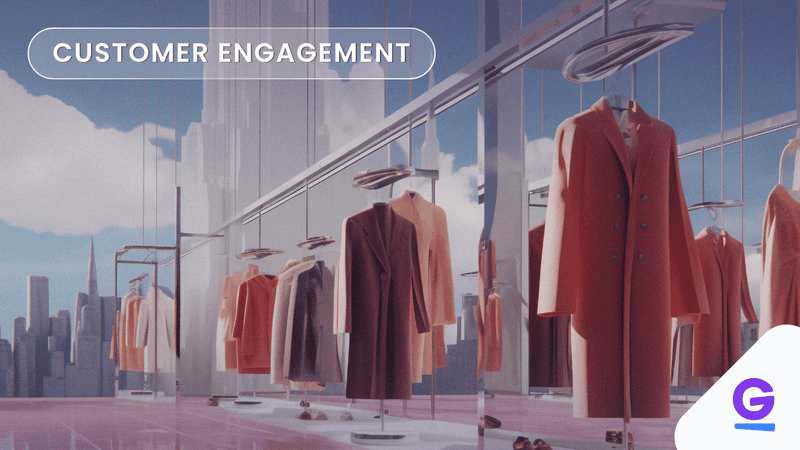
Fashion e-commerce has an engagement problem that looks, at first glance, like a success. Users are spending more time in fashion apps than ever before. They are scrolling, saving, hearting, and filling carts with precision. Engagement metrics are strong. But the conversion is not happening.
Fashion e-commerce cart abandonment sits at 77.6%, approximately 2.73% higher than the cross-category average, according to Envive's 2026 fashion conversion analysis. Return rates average 25 to 40%, with 38% of those returns attributed to sizing and fit issues, at a cost of $21 to $46 per returned item. The cart is full. The checkout is empty. The margin is under pressure.
This is the ghost cart paradox: high engagement, low commitment, expensive returns. Understanding why it happens is the prerequisite for solving it.
Key highlights
- Fashion e-commerce experiences 77.6% cart abandonment, approximately 2.73% higher than the cross-category average, driven by unexpected costs, checkout friction, and the fundamental inability to touch or try items before purchasing. 47% of consumers cite this physical limitation as a primary reason they dislike online fashion shopping.
- Fashion return rates average 25 to 40%, with 38% of returns attributed to sizing and fit issues, according to Red Stag Fulfillment's 2026 industry analysis. Some fashion retailers report rates as high as 88% during peak promotional periods when customers engage in heavy bracketing behavior.
- 43% of fashion purchases are influenced by personalized recommendations, and 75% of consumers actively prefer brands offering tailored experiences, according to Envive's analysis. The data confirms that the solution to ghost carts is not better checkout optimization but better pre-purchase personalization.
- Personalized styling services achieve 47% retention, demonstrating the value of curation in reducing choice overload in fashion, according to Envive's 2026 customer retention analysis.
- The AI in fashion market is projected to grow from $2.23 billion to $60.57 billion by 2034 at a 39.12% CAGR, driven largely by personalization, virtual try-on, and style matching technologies that address the core friction driving cart abandonment and returns.
The ghost cart in numbers
The financial stakes of the ghost cart problem are specific enough to make the business case for engagement architecture without requiring persuasion.
A fashion retailer with 100,000 monthly active app users, each with an average cart value of $85, faces an annual ghost cart revenue gap of approximately $78 million assuming the 77.6% abandonment rate. Of the 22.4% who do convert, roughly 25 to 30% return their purchases, at $21 to $46 per return in operational cost. The realized revenue from those engaged, browsing, saving users is a fraction of what the engagement metrics suggest.
The technical fixes have reached their limits. Simplified checkout, transparent shipping costs, and guest payment options have all been deployed at scale. Cart abandonment has not moved meaningfully in response to these optimizations because the abandonment is not primarily a checkout problem. It is a confidence problem that originates much earlier in the journey.
Why fashion carts stay full but checkouts stay empty
The modern fashion shopper is not primarily shopping. They are browsing as a form of identity construction, digital escapism, and aesthetic curation. The cart serves as a temporary storage facility for aspirations rather than a precursor to purchase.
In 2026, the fashion app is a gallery, a mood board, and a social playground simultaneously. The moment a shopper reaches the checkout button, the fantasy ends and the financial reality begins. That transition is where most brands lose their audience.
Understanding this dynamic changes the diagnosis. The ghost cart is not a failure of checkout design. It is a natural consequence of a digital experience that is optimized for browsing without providing the confidence, personalization, and identity validation that converts aspiration into commitment.
The shopper who saves twelve items to their cart is telling the brand something specific: I am interested in this aesthetic, I have not yet found the specific item that feels unambiguously right for me, and I do not trust the fit enough to commit. Each of those three signals has a specific behavioral architecture response.
The tastemaker economy: who fashion shoppers are now
The consumer psychology driving the ghost cart reflects a generational shift in how fashion is experienced. A generation raised on sandbox games, creative platforms, and participatory social media does not want to be a passive recipient of a curated catalog. They want to be trend-setters, co-creators, and style arbiters.
This is the tastemaker economy: shoppers who place social validation and identity expression ahead of the transactional relationship with a brand. They are not buying garments. They are building a self-concept, and the brand's job is to provide the tools and the community to do that authentically.
The commercial implication is that personalization is not a luxury feature. For this consumer, an experience that does not recognize their specific aesthetic identity, fit profile, and style preferences reads as generic, and generic does not convert. The 75% of consumers who actively prefer brands offering tailored experiences and the 43% of purchases influenced by personalized recommendations represent the measurable commercial consequence of this psychology.
Three engagement mechanics that close the ghost cart gap
The mechanics that address the ghost cart paradox operate on the confidence and personalization problems that checkout optimization cannot touch.
| Fashion CX challenge | Commercial impact | Engagement solution |
|---|---|---|
| Sizing and fit uncertainty (38% of returns) | $21-$46 per return, 25-40% return rate | Zero-party data style and fit profiler |
| Discount dependency | Eroded brand equity, margin compression | Status and access incentives over price cuts |
| Ghost cart / identity browsing | 77.6% abandonment, low conversion | Interactive gamification that rewards curation |
| Fragmented loyalty | Low LTV, earn-and-burn programs ignored | Behavioral rewards for non-transactional engagement |
Mechanic 1: The style persona profiler
Generic homepages and broad category pages produce choice paralysis: the volume of inventory overwhelms rather than helps. The style persona profiler replaces passive browsing with an active discovery loop.
Users swipe on a curated series of outfits in a rapid "this or that" format. Ten swipes in under thirty seconds produces a style profile that categorizes the shopper's aesthetic, size preferences, and occasion context. The brand collects high-intent zero-party data voluntarily. The shopper receives a personalized homepage that shows them exactly what resonates with their aesthetic, eliminating the friction of searching across categories.
The commercial outcome is a shortened path to purchase, significantly higher conversion rate on personalized recommendations, and the foundation for accurate fit matching that reduces return rates. The 43% of purchases influenced by personalization and the 38% of returns attributed to fit and sizing issues identify precisely why this mechanic produces results across both the conversion and returns metrics simultaneously.
Mechanic 2: The live predictor and drop event
Limited-edition drops and flash sales are currently experienced as stressful, chaotic, and purely transactional. The mechanic that produces the highest community energy around these moments is anticipation and collective participation rather than competitive pressure.
Before a drop, users participate in prediction challenges: which items will sell out first, which colorways will become the most sought-after, which pieces will define the season. Correct predictions earn early access rights or exclusive purchase opportunities. Users can also enter tombola draws for limited-edition access.
The shift is from a "refresh-and-buy race" to a social event where access is earned through brand affinity and predictive accuracy. The community that formed around the prediction event becomes the audience for the next drop announcement. The brand has converted a transactional moment into a community-building one.
Mechanic 3: The circular wardrobe habit loop
The post-purchase engagement gap is where most fashion loyalty programs fail. The points-for-purchases model activates only at the next transaction, providing no reason to engage with the brand between spending moments.
The circular wardrobe habit loop rewards non-transactional engagement: logging rewears, styling existing wardrobe items, sharing outfit combinations with the community, exploring pre-loved and circular collections. Users earn community status and exclusive access, not discounts, for participation.
The mechanic addresses the ghost cart at the retention level: a customer who is actively engaged in the brand's ecosystem between purchases develops the brand relationship that makes returning to purchase feel natural rather than discretionary. The 47% retention rate associated with personalized styling services demonstrates that curation-driven engagement produces measurably better retention than generic loyalty mechanics.
How GUUL enables fashion engagement without rebuilding the stack
The execution barrier for fashion brands wanting to implement these mechanics is not strategic intent. It is technical capacity. Adding interactive profilers, live event infrastructure, and habit loop mechanics to an existing e-commerce platform requires backend development that most fashion technology teams cannot prioritize alongside core platform work.
GUUL operates as engagement middleware for fashion retail: a modular layer that connects to existing platforms through API and iframe integration, deploys style profilers, live event formats, and habit loop mechanics, and passes zero-party data into the brand's existing CRM and personalization systems.
The profiler data flows directly into the personalization engine that powers email, SMS, and on-site recommendations. The drop event runs on the existing product pages without a platform rebuild. The habit loop operates within the existing app or loyalty experience. The behavioral data connects to Klaviyo, Braze, or whichever marketing automation platform the brand already uses.
Key takeaways
- Fashion e-commerce cart abandonment at 77.6% and return rates averaging 25 to 40% are not primarily checkout problems. They are confidence and personalization problems that originate earlier in the journey. Checkout optimization has reached its limit; engagement architecture has not.
- The ghost cart reflects a fundamental shift in how fashion is experienced. Shoppers are curating identities, not completing transactions. The engagement mechanics that convert aspiration into commitment are those that provide the personalization, fit confidence, and social validation that browsing alone cannot deliver.
- The style persona profiler addresses the 38% of returns attributed to fit and sizing issues by collecting zero-party data voluntarily through a format that feels like a brand interaction rather than a survey.
- The live predictor mechanic converts high-traffic drop moments from stressful transactional races into community events where access is earned through brand affinity, producing the social energy and loyalty that pure scarcity mechanics cannot sustain.
- The circular wardrobe habit loop addresses the post-purchase engagement gap by rewarding the behaviors, rewearing, styling, sharing, that keep the brand present in the customer's life between purchases.
FAQ
What is the ghost cart paradox in fashion e-commerce? The ghost cart paradox describes the disconnect between high engagement metrics and low conversion rates in fashion e-commerce. Shoppers spend significant time browsing, saving, and filling carts, but abandon at the checkout stage at a rate of 77.6%, approximately 2.73% above the cross-category average. The paradox is that engagement is strong while conversion is weak. The cause is not checkout friction but a confidence and personalization deficit earlier in the journey: shoppers are browsing to curate a digital identity rather than to commit to a purchase, and leave when the fantasy of the cart meets the reality of the checkout.
How does zero-party data reduce fashion return rates? Fashion return rates averaging 25 to 40%, with 38% attributed to sizing and fit issues, are primarily a personalization problem: the wrong product is recommended to or chosen by the shopper because the brand lacks accurate preference and fit data. Zero-party data profilers, style swipe mechanics and fit preference quizzes, collect this data voluntarily through an engaging brand interaction. The personalized recommendations generated from this data match the shopper's actual aesthetic and fit profile rather than inferring it from browsing behavior, producing measurably lower return rates and higher conversion on recommended items.
What is the tastemaker economy in fashion retail? The tastemaker economy describes the shift in fashion consumer psychology from passive buying to active identity curation. A generation raised on participatory social media and creative platforms expects to be treated as trend-setters and co-creators rather than passive recipients of a marketing message. These shoppers are not buying garments; they are building a self-concept. Brands that provide the interactive tools and community context for this identity expression, style profilers, community validation mechanics, exclusive access through engagement, convert tastemaker browsers into loyal community members rather than ghost cart generators.
How do live event mechanics improve fashion drop performance? Traditional flash sales and limited-edition drops create a stressful, purely transactional experience that favors fast clickers over loyal community members. Live predictor mechanics convert these moments into community events: users predict sell-out items, enter tombola draws for exclusive access, and earn purchase rights through demonstrated brand affinity. The community that forms around the prediction event becomes the audience for future drop announcements, producing organic re-engagement without paid acquisition. The shift is from transactional urgency to community participation, which generates both better drop conversion and stronger post-drop retention.
What engagement mechanics produce the best fashion customer retention? The mechanics that produce the strongest fashion retention are those that create engagement between purchase moments rather than only at the point of transaction. Personalized styling services achieve 47% retention, demonstrating the commercial value of curation over generic loyalty programs. Circular wardrobe habit loops that reward rewearing, styling, and community sharing keep the brand present in the customer's daily life between purchases. Style profiler data that improves the accuracy of personalized recommendations reduces the return rates and purchase regret that drive customer churn.
Talk to GUUL about solving the ghost cart for your fashion platform →
Sources
- Envive.ai (2026). 37 Fashion Brand Conversion Statistics for eCommerce. 77.6% cart abandonment, 43% personalization influence, 75% tailored experience preference, 47% retention from personalized styling. https://www.envive.ai/post/fashion-brand-conversion-statistics
- Red Stag Fulfillment (2026). Average Ecommerce Return Rates Industry Analysis. Fashion 25-40% return rate, 38% sizing/fit attribution, $21-$46 cost per return, 88% peak promotional period rates. https://redstagfulfillment.com/average-return-rates-for-ecommerce/
- Envive.ai (2026). 36 Customer Retention Statistics in eCommerce. Personalized styling 47% retention, automated email statistics. https://www.envive.ai/post/customer-retention-in-ecommerce-statistics
- Motista / Harvard Business Review (2018). Emotional connection 306% higher LTV, 5.1-year loyalty duration. https://hbr.org/2018/08/the-value-of-keeping-the-right-customers
- AI in Fashion Market (2025). $2.23B to $60.57B by 2034, 39.12% CAGR. Referenced via Envive fashion statistics.