Google Meet add-ons: the best tools for every meeting need
Google Workspace Marketplace lists over 5,000 apps compatible with Google's suite, with hundreds specifically built for Meet. Most people use three: the background blur, the emoji reactions, and whichever note-taking tool their IT team installed. The rest of the ecosystem goes largely undiscovered, which means most teams are running meetings at a fraction of what the platform can actually do.
Add-ons change the equation by bringing tools directly into the meeting side panel. Instead of the "screen-share shuffle," where someone stops sharing to open another app and then shares again, everything lives inside the call. Participants interact with the tool in real time without leaving the Google Meet interface. It is a small structural difference with a significant impact on meeting flow and engagement.
This guide covers the most useful Google Meet add-ons by category, with specific recommendations for each need.
Key highlights
- Google Workspace Marketplace offers over 5,000 apps, with a growing number built specifically as Google Meet add-ons that run in the side panel without requiring participants to leave the call.
- Google Meet has over 300 million monthly active users, and the platform's add-on ecosystem has expanded significantly with Google's focus on making Meet a collaborative workspace rather than just a video conferencing tool.
- The most impactful add-on categories for team productivity are visual collaboration, note-taking and transcription, task management, and engagement and games.
- Google Meet add-ons are managed through the Google Workspace admin console, allowing IT teams to pre-install, restrict, or deploy specific tools across the organization.
- The engagement add-on category has seen the fastest growth in the Marketplace, reflecting increasing recognition that meeting participation and human connection require deliberate design, not just good agenda-setting.
Why add-ons matter: the side panel difference
Standard Google Meet gives you video, audio, chat, and screen sharing. These are the infrastructure of a meeting. They do not make a meeting productive, creative, or energizing. That requires the right tools, at the right moment, without breaking the flow to switch applications.
The Google Meet add-on model solves this through the side panel. When a host or participant opens an add-on, it appears in a panel alongside the video feed. Other participants see the same panel on their screens. The conversation continues. The collaboration tool is live. Nobody has to leave.
This architecture is particularly valuable for three types of meeting moments: the beginning, where energy and focus need to be established quickly; the middle, where complex ideas need a shared visual or structured capture; and the end, where decisions need to be converted into tasks before anyone closes their laptop.
Visual collaboration add-ons
Visual collaboration tools give distributed teams a shared canvas for thinking together. They are most effective in creative sessions, strategic planning, design reviews, and any meeting where concepts benefit from being drawn rather than described.
Miro is the most widely deployed visual collaboration tool in the Marketplace. Its Google Meet integration allows participants to work on the same Miro board in real time during a call, with the board appearing in the side panel for all participants. Teams use it for brainstorming sessions, journey mapping, retrospectives, and sprint planning. Miro boards persist after the meeting, making them useful as living documents that evolve between sessions.
Google's native Jamboard (now transitioning to FigJam within Google Workspace) provides a simpler whiteboarding experience that integrates natively with Meet. For teams that do not need the depth of Miro, the native integration is the lowest-friction starting point.
Lucidspark offers structured diagram and flowchart capabilities alongside freeform whiteboarding. It is particularly useful for technical and process-oriented teams who need to map workflows or system architecture during a meeting.
Best for: Creative teams, product teams, facilitators running structured workshops, any meeting where "let me show you what I mean" would be more effective than "let me describe what I mean."
Note-taking and transcription add-ons
The most common reason meeting outcomes are not acted on is not that decisions were not made. It is that nobody captured them accurately, or the notes sat in someone's personal document rather than a shared location. Transcription add-ons address this at the source.
Otter.ai provides real-time transcription, speaker identification, and AI-generated meeting summaries. Its Google Meet integration captures the conversation as it happens, identifies action items, and produces a searchable transcript that participants can access after the call. Otter's Google Meet add-on is one of the most-installed in the Marketplace, reflecting how consistently teams need this capability.
Fireflies.ai offers similar transcription functionality with deeper CRM integration, making it particularly useful for sales and customer success teams who need meeting notes automatically logged to Salesforce, HubSpot, or similar platforms.
Google Meet's native AI notes (available on Google Workspace Business Standard and above) provides built-in meeting summaries and action item identification without a third-party tool. For organizations already on qualifying Workspace plans, this is the zero-friction starting point. The notes appear automatically after the meeting ends, accessible to all participants in the Meet interface.
Best for: Any team that currently ends meetings with "can someone send the notes?" and sometimes waits days for an answer. Sales teams, project teams, and distributed teams with participants across time zones.
Task management and workflow add-ons
The gap between a meeting decision and an actual task assigned to an actual person is where most meeting outcomes disappear. Task management add-ons close this gap by allowing task creation during the meeting, from within the meeting, before anyone closes their laptop.
Asana for Google Meet allows participants to create, assign, and tag Asana tasks directly from the side panel during a meeting. Decisions that require follow-up can be captured as tasks in real time, with owners and due dates set before the agenda moves on. The tasks appear in the team's Asana project immediately.
Monday.com offers a similar Meet integration, particularly useful for teams using Monday as their primary project management layer. Items discussed in the meeting can be added to Monday boards without leaving the call.
Jira integration is available for engineering and product teams whose work lives in Atlassian's ecosystem. Issues raised during sprint reviews or planning sessions can be created and assigned in Jira from the Meet side panel.
Best for: Project teams, product teams, and any recurring meeting where action items are discussed but frequently fall through the execution gap between the meeting and the task system.
Google Meet activities and games: the engagement add-on category
The fastest-growing add-on category in the Google Workspace Marketplace is engagement: tools designed to address the participation, energy, and connection problems that even well-structured meetings struggle with.
This category exists because meeting productivity tools solve the wrong problem on their own. A meeting with perfect notes, clear tasks, and a shared whiteboard can still be attended passively by participants who are half-present, checking their phones, and waiting for it to end. Engagement tools address the human dimension of meetings that productivity tools leave untouched.
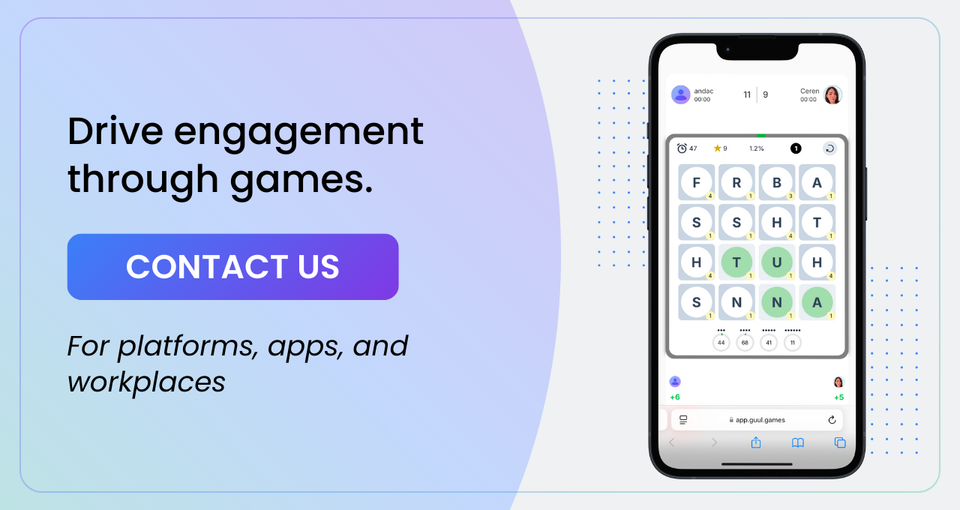
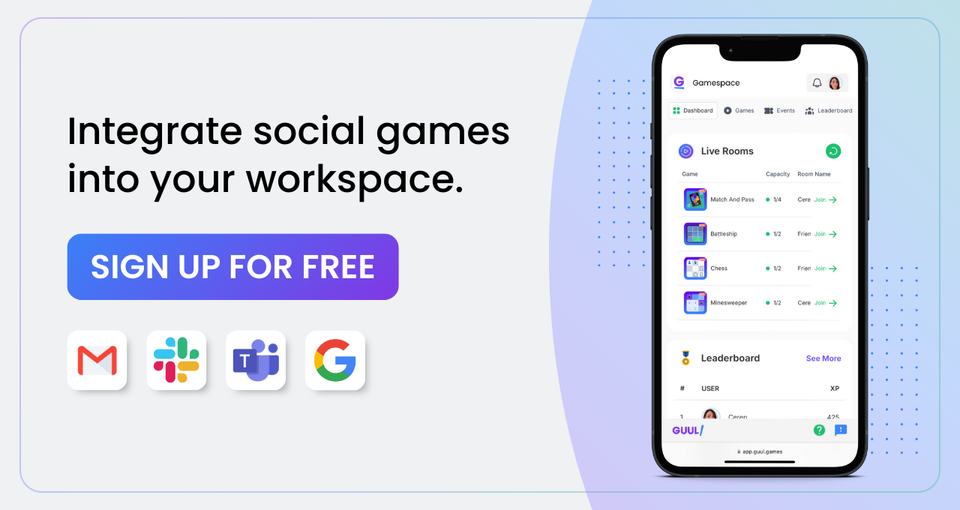
GUUL is built specifically for this dimension. As a Google Meet add-on installed from the Workspace Marketplace, GUUL appears in the side panel of every Meet session. The host opens the panel, selects a game from the library, and participants join directly within the call. No separate tab, no new account, no sign-in outside of their existing Google credentials.
For meeting warm-ups: Live Trivia runs in the GUUL side panel with questions visible to all participants simultaneously. A five-minute trivia round before a brainstorm or all-hands shifts participants from passive-attendance mode to active-engagement mode. The energy difference is immediate and consistent across teams that have made it a habit.
For longer calls and workshops: A game break at the 45-minute mark of any call over an hour gives participants the cognitive reset that Stanford's meeting fatigue research identifies as necessary for sustained focus. The break happens inside the meeting, with the group, rather than dispersing participants to individual screen breaks that fragment the social energy of the session.
For team rituals: Google Meet activities like weekly team trivia, paired Chess or Scrabble matches between colleagues, and prediction games tied to live events all run through the GUUL panel and become the recurring social rituals that remote teams need but rarely build through task-based communication alone.
For onboarding: A quick paired game between a new hire and their buddy or manager, run inside a Meet session in the first week, creates a shared moment and an organic reason for follow-up conversation that an introductory meeting cannot replicate.
GUUL's game library covers multiplayer social games (Scrabble, Chess, Battleship, Connect4, Backgammon), daily puzzles (Wordle-style word games, Nerdle, Sudoku), live event formats (Trivia, Tombola, Prediction games, Tournament), and team-building formats. All formats are accessible through the same side panel add-on, managed through the Google Workspace admin console for organization-wide deployment.
How to choose the right Google Meet tools
The add-on that works for one team's need may be unnecessary or even disruptive for another's. The decision framework is straightforward: identify the specific meeting problem first, then match the tool to that problem.
| Meeting problem | Add-on category | What to look for |
|---|---|---|
| Ideas are discussed but not captured visually | Visual collaboration | Miro, Lucidspark, FigJam |
| Decisions are made but not remembered | Note-taking and transcription | Otter.ai, Fireflies.ai, Google AI notes |
| Action items are agreed on but not acted on | Task management | Asana, Monday.com, Jira |
| Participants are present but not engaged | Engagement and games | GUUL Gamespace |
| Meetings are back-to-back and cognitively draining | Engagement and games | GUUL game breaks |
| New team members feel disconnected | Engagement and games | GUUL onboarding games |
The instinct is to install several add-ons at once. The more effective approach is to identify the highest-impact problem first, solve it with a single tool, establish the habit, and then expand. Two add-ons used consistently produce more value than six used occasionally.
Getting started with Google Meet add-ons
All add-ons are installed through the Google Workspace Marketplace, accessible from the Meet interface or directly at workspace.google.com/marketplace. For organization-wide deployment, Workspace admins can pre-install add-ons and manage access through the admin console, which is the recommended approach for tools like GUUL that benefit from consistent availability across all team meetings.
For GUUL specifically, the installation path is:
- Find GUUL Gamespace on the Google Workspace Marketplace
- Install it to your workspace
- Open any Google Meet session and access GUUL from the side panel
- Select a game and invite participants to join from within the call
Once installed, GUUL is available in the panel for every subsequent Meet session without any additional setup. The Gamespace Scheduler allows team leads to plan recurring game sessions in advance, a weekly trivia warm-up, a monthly team tournament, a quarterly prediction challenge, which participants access through the same panel automatically.
Key takeaways
- Google Meet add-ons run in the side panel alongside the video feed, allowing tools to be used during meetings without screen-share disruption or context switching.
- The most impactful add-on categories solve specific meeting problems: visual collaboration for creative sessions, transcription for decision capture, task management for follow-through, and engagement tools for participation and human connection.
- The engagement category addresses the part of meeting quality that productivity tools do not: whether participants are actually present, energized, and genuinely connected to each other and to the session.
- Google Meet tools work best when deployed for a specific problem rather than installed broadly. Identify the highest-impact gap in your meeting quality, solve it with one tool, and build the habit before adding more.
- GUUL's side panel integration means game-based engagement happens inside the call, with no new accounts, no separate tabs, and no friction for participants who are already signed in with Google.
FAQ
What are Google Meet add-ons? Google Meet add-ons are applications installed from the Google Workspace Marketplace that run in the side panel of a Google Meet session. They allow participants to use collaboration tools, note-taking apps, task management systems, and engagement features without leaving the Meet interface. Add-ons are installed once through the Marketplace and then appear automatically in the Meet side panel for all subsequent sessions. Workspace admins can pre-install and manage add-ons for their entire organization through the Google Workspace admin console.
What are the best Google Meet add-ons for team engagement? GUUL Gamespace is the most comprehensive engagement add-on for Google Meet, providing a full game library including live trivia, multiplayer social games, daily puzzles, prediction games, and tournament formats, all accessible from the Meet side panel with Google sign-in. For poll and survey-based engagement, Polly is a widely-used Marketplace option. For interactive presentation engagement, Interactico offers in-meeting polls and quizzes without requiring guest installation.
How do Google Meet activities improve meeting participation? Google Meet activities create active participation moments that break the passive reception pattern of standard video calls. Stanford research has identified increased cognitive load as one of the primary causes of video call fatigue. Short game-based activities provide a cognitive mode shift that resets focus and increases subsequent participation quality. Teams that use five-minute game warm-ups before substantive meetings consistently report higher engagement in the sessions that follow.
What Google Meet tools work best for remote team building? For remote team building, the most effective Google Meet tools are those that create shared experiences rather than shared screens: GUUL's multiplayer game formats create peer interaction and competitive history between colleagues who would otherwise only interact in structured meeting contexts. Paired games between a new hire and their buddy, weekly team trivia sessions, and tournament brackets that run across a team over several weeks all build the social connection that task-based communication cannot produce on its own.
How do you install Google Meet add-ons? Google Meet add-ons are installed through the Google Workspace Marketplace at workspace.google.com/marketplace. Search for the add-on by name, select it, and click Install. For personal installation, the add-on appears in your Meet sessions after authentication. For organization-wide deployment, a Workspace admin can install the add-on through the admin console, making it available to all users in the organization without individual installation steps. GUUL is available at Google Workspace Marketplace.
Install GUUL for Google Meet →
Sources
- Google Workspace Marketplace (2026). Add-ons available for Google Meet. https://workspace.google.com/marketplace/search/meet
- AboutChromebooks (2026). Google Workspace Integration and Usage Statistics 2026. 5,000+ Marketplace apps, 3 billion MAU. https://www.aboutchromebooks.com/google-workspace-integration-usage-rates/
- EarthWeb (2026). How Many People Use Google Meet in 2026. 300 million monthly active users. https://earthweb.com/google-meet-users/
- Google Support (2026). Use add-ons with Google Meet. https://support.google.com/meet/answer/13961388
- Bailenson, J.N. (2021). Nonverbal overload: A theoretical argument for the causes of Zoom fatigue. Technology, Mind, and Behavior, 2(1). https://news.stanford.edu/stories/2021/02/four-causes-zoom-fatigue-solutions
- Albulescu, P. et al. (2022). "Give me a break!" Meta-analysis of micro-breaks, 22 studies. PLOS ONE. https://journals.plos.org/plosone/article?id=10.1371/journal.pone.0272460
- GUUL Gamespace on Google Workspace Marketplace. https://workspace.google.com/marketplace/app/guul_gamespace/198395429941