CX trends 2026: building behavioral architecture

For a decade, the dominant customer experience strategy was transactional excellence: make the checkout faster, the delivery more reliable, the support more responsive. The brands that executed this best won. Then every competitor executed it too, and the advantage disappeared.
In 2026, speed and efficiency are baseline expectations. They are not loyalty drivers. When every competitor offers seamless purchase and same-day delivery, the transaction is not where customer experience lives anymore. Customer experience lives in the 98% of the customer journey that happens between purchases.
This shift is the defining CX trend of 2026: from managing the transaction to architecting the behavior around it.
Key highlights
- The 2025 Qualtrics Consumer Trends Report identified loyalty as increasingly harder to win and more easily lost, with even moderate improvements in experience producing a 1.6x increase in repeat purchase likelihood. The implication is that marginal transactional improvements no longer move the needle, but experience improvements still do.
- McKinsey's Customer Decision Journey research distinguishes between active loyalty (genuine brand preference, bypassing evaluation entirely) and passive loyalty (habitual repurchase driven by inertia). In 2026, passive loyalty has become structurally fragile: any competitor offering a better experience can break it instantly.
- Forrester coined the term zero-party data to describe information customers intentionally and proactively share with a brand. Companies that effectively leverage zero-party data see a 25% improvement in personalization efforts, according to Forrester research.
- McKinsey's research on AI-driven "next best experience" personalization shows that deploying this approach can enhance customer satisfaction by 15 to 20%, increase revenue by 5 to 8%, and reduce cost-to-serve by 20 to 30%.
- A PwC study found that 88% of consumers identify trust as the key driver of brand loyalty. As AI handles routine interactions, the human and emotional dimensions of brand experience become the primary differentiator.
Why transactions no longer build loyalty
The vending machine model of commerce is complete. Insert money, receive product, transaction ends. For brands that built their CX strategy around this model, the structural problem is now visible in the data: customers who only interact during purchase moments are not loyal customers. They are customers waiting for a better offer.
The McKinsey loyalty loop explains why. Consumers who have moved into a genuine loyalty loop do not re-evaluate alternatives at every purchase. They have already decided. They come back automatically. But building that loop requires more than a good product and a smooth checkout. It requires the repeated positive interactions between purchases that make the brand feel present and rewarding outside of commercial moments.
Customer experience in 2026 is not about the five minutes a customer spends buying. It is about the other 95 minutes they spend browsing, researching, comparing, and not yet deciding. That is where loyalty is built or lost.
Brands that measure CX success only through conversion and post-purchase satisfaction are measuring the wrong part of the journey. The engagement that produces active loyalty happens in the spaces between transactions, in the moments when the customer has no immediate commercial intent but the brand has an opportunity to be present, useful, and rewarding.
Four trends reshaping customer experience in 2026
These are not predictions. They are shifts already visible in the behavior of leading brands and the data their customers are generating.
| Trend | What it means | Customer experience implication |
|---|---|---|
| Zero-party data as value exchange | Privacy regulation and cookie deprecation have made behavioral tracking unreliable. The only data brands can trust is data customers choose to share. | Brands must earn data through value exchange: interactive quizzes, preference games, style assessments. The interaction that collects the data must itself be worth having. |
| The 98% strategy | Most marketing budgets target the 2% of customers ready to convert now. The behavioral architecture shift targets the other 98% through micro-interactions that sustain engagement between purchase moments. | Brands need engagement formats that activate customers when they have no immediate purchase intent: daily challenges, prediction games, community events, content interactions. |
| Experience-led loyalty ecosystems | The earn-and-burn points model has lost effectiveness with younger consumers. Loyalty is being rebuilt around experiences, participation, and identity rather than discounts and points. | Behavioral mechanics, streaks, challenges, community leaderboards, unlock-based progression, create the emotional bond that points accumulation alone cannot produce. |
| Agentic AI and the trust gap | As AI handles routine CX interactions, consumers expect the human and relational dimensions of brand experience to become more prominent, not less. | Brands that use interactive, opt-in mechanics to collect preference data are demonstrating respect for privacy. Gamified data collection builds trust that surveillance-based tracking destroys. |
From passive loyalty to behavioral architecture
The language of behavioral architecture is worth unpacking because it describes something more specific than "better CX."
Behavioral architecture is the deliberate design of digital environments to create the conditions for specific voluntary behaviors: daily app opens, preference sharing, community participation, streak maintenance. It draws on the same psychology as game design: clear goals, immediate feedback, visible progress, social context, and variable rewards that sustain engagement across time.
The key distinction from traditional loyalty mechanics is voluntariness. A customer who opens an app every morning to complete a daily challenge is doing so because it is rewarding, not because they have been notified. A customer who shares their style preferences through an interactive quiz is doing so because the experience itself is worth having, not because they were tracked. The behaviors are identical in outcome but fundamentally different in psychological character.
This distinction matters commercially. Voluntary daily engagement produces a relationship. Notification-driven engagement produces a dependency that breaks the moment the notification is turned off. Customer engagement built through behavioral architecture is structurally more durable than engagement built through interruption mechanics.
Gamification as the mechanism of behavioral architecture
Gamification is often described as if it means adding badges and wheels to an app. In the context of behavioral architecture, it means something more structural: using game mechanics to make the desired behaviors feel intrinsically rewarding.
The mechanics that produce behavioral architecture are specific. Streak mechanics create the daily return habit through loss-aversion: a customer with a thirty-day streak has an accumulated investment that makes returning tomorrow feel necessary rather than optional. Progress visualization makes intermediate achievements visible and rewarding before the long-term goal is reached. Leaderboards and community challenges add social stakes that make individual behaviors part of a collective experience. Variable reward events, tombola draws, prediction outcomes, prize reveals, create the anticipation and surprise that sustain engagement across campaign windows.
When a fashion brand implements interactive zero-party data mechanics, the results are measurable and specific. A 40% higher email click-through rate reflects the data accuracy that personalization based on self-reported preferences produces. A 25% increase in average order value reflects the higher purchase confidence of customers who have been guided through a preference discovery process. A 60% reduction in product returns reflects the matching quality that zero-party data enables. These are not engagement metrics. They are commercial outcomes produced by behavioral architecture.
Defining a customer engagement strategy for 2026
The brands building durable customer engagement in 2026 share a specific strategic approach. They treat the game layer not as a marketing feature but as product infrastructure: something built into the customer experience from the beginning rather than added on top of an existing transactional platform.
A customer engagement strategy built on behavioral architecture has four components.
A daily non-transactional trigger. Something that gives customers a reason to open the platform when they have no purchase intent: a daily puzzle, a streak-building challenge, a community event, a prediction game tied to an upcoming moment. The trigger operates independently of the commercial calendar.
A preference data collection mechanism. Interactive formats, style quizzes, product discovery games, prediction challenges, that collect zero-party data as a byproduct of a genuinely enjoyable experience. The data collection is transparent, consensual, and valuable to both parties.
A social and community layer. Leaderboards, team challenges, shared events, that make individual engagement visible to others and create the belonging that transforms users into community members. Community identity is the most durable loyalty driver available.
A measurement framework tied to behavioral outcomes. Not just conversion rates and satisfaction scores, but DAU/MAU ratios, streak participation rates, challenge completion rates, and cross-feature adoption rates. The behavioral metrics that indicate whether the architecture is producing the habits it was designed to create.
How GUUL functions as engagement middleware
The operational challenge most enterprises face when building behavioral architecture is not strategic. It is technical. Rebuilding a core app or web environment to include sophisticated interactive mechanics is a year-long, resource-draining infrastructure project. Most brands cannot afford it and most IT teams cannot prioritize it.
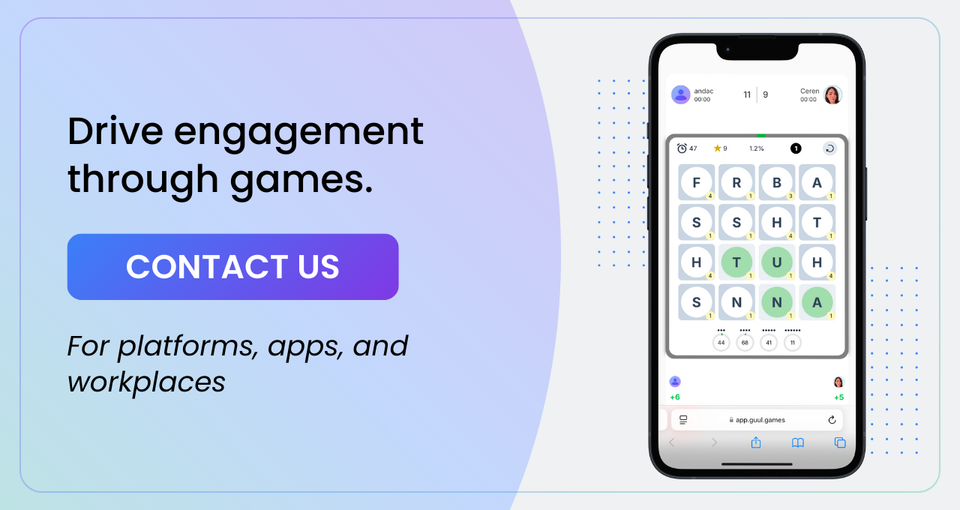
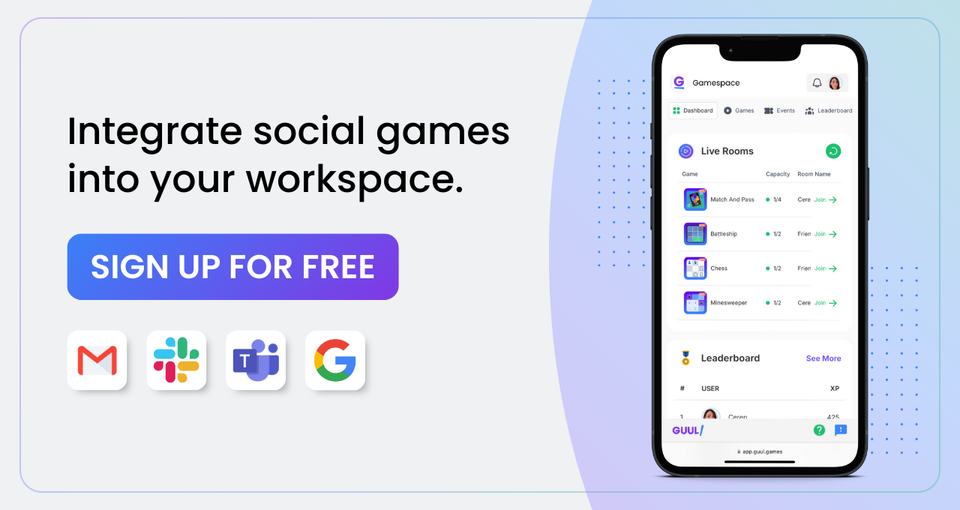
GUUL operates as a modular engagement middleware layer that sits on top of existing brand ecosystems. Marketing and product teams deploy game mechanics, daily habits, live events, and zero-party data collection formats without modifying the brand's core backend infrastructure. The game layer connects to existing CRM and analytics systems, passing behavioral data into the infrastructure the brand already uses to activate personalization.
The deployment model is specifically designed for the CX reality most enterprise brands face: large existing customer bases, established loyalty programs, and limited engineering bandwidth. GUUL's API connects to the platform. The game formats go live. The behavioral data flows into the CRM. The feedback loop between engagement and personalization begins operating without a platform rebuild.
As this series explores each sector in depth, from retail to fintech to travel to healthcare, the behavioral architecture principles remain consistent. What changes is the specific customer behavior each sector needs to engineer, the game formats that work for each context, and the metrics that prove the architecture is producing the loyalty outcomes it was designed for.
Key takeaways
- Efficiency is no longer a CX differentiator. Every competitor can offer seamless checkout and fast delivery. Loyalty now lives in the engagement that happens between purchases, in the 98% of the customer journey that is not a transaction.
- The shift from passive loyalty to active loyalty requires behavioral architecture: designing the digital environment to make voluntary daily engagement feel intrinsically rewarding, rather than relying on notifications and discount mechanics that produce dependency without relationship.
- Zero-party data is the only customer data that can be fully trusted in a privacy-first environment. The brands earning this data through genuinely valuable interactive experiences will have a durable personalization advantage over those that depend on inferred or tracked behavioral data.
- Gamification is the mechanism of behavioral architecture, not a feature layer added to it. Streak mechanics, progress visualization, community challenges, and variable reward events create the voluntary daily habits that produce active loyalty.
- A 2026 customer engagement strategy requires four components: a daily non-transactional trigger, a zero-party data collection mechanism, a social and community layer, and a measurement framework tied to behavioral outcomes rather than transactional conversion alone.
FAQ
What is behavioral architecture in customer experience? Behavioral architecture in CX is the deliberate design of digital environments to create conditions for specific voluntary customer behaviors: daily app opens, preference sharing, community participation, streak maintenance. It draws on game design psychology to make desired behaviors feel intrinsically rewarding rather than externally prompted. The distinction from traditional loyalty mechanics is voluntariness: behavioral architecture produces habits that operate independently of notifications and discount incentives, which makes the resulting loyalty structurally more durable.
What are the most important CX trends for 2026? The four most significant customer experience trends shaping 2026 are the zero-party data value exchange (brands must earn data through valuable interactive experiences rather than track it), the 98% strategy (engaging customers during the vast majority of their journey when they have no purchase intent), experience-led loyalty ecosystems (building loyalty through participation and identity rather than earn-and-burn points), and the trust gap created by agentic AI (as AI handles routine interactions, human and emotional brand dimensions become primary differentiators).
What is zero-party data and why does it matter for customer engagement? Zero-party data, a term coined by Forrester, is information customers intentionally and proactively share with a brand. It is the most reliable form of customer data because it is consensual, accurate, and privacy-compliant by design. Brands that collect zero-party data through genuinely valuable interactive experiences, style quizzes, preference games, prediction challenges, see measurably better personalization outcomes: Forrester research documents a 25% improvement in personalization effectiveness. As third-party tracking becomes unavailable, zero-party data is the only scalable foundation for personalization.
How does gamification support a customer engagement strategy? Gamification supports customer engagement strategy by making the daily behaviors that build loyalty, app opens, preference sharing, community participation, feel intrinsically rewarding rather than externally prompted. Streak mechanics create return habits through loss-aversion. Progress visualization provides immediate rewards for behaviors whose commercial benefits are delayed. Community leaderboards and challenges add social stakes that sustain individual engagement through collective context. Variable reward events create anticipation that maintains brand salience between purchase windows.
What is engagement middleware and how does GUUL function as one? Engagement middleware is a modular software layer that sits on top of a brand's existing platform infrastructure and enables the deployment of interactive, gamified mechanics without requiring backend reconstruction. GUUL functions as engagement middleware by connecting to existing brand ecosystems through API integration, deploying game formats, daily challenges, live events, and interactive data collection, and passing behavioral data into the brand's existing CRM and analytics infrastructure. It allows marketing and product teams to implement behavioral architecture without the year-long engineering projects that platform rebuilds require.
Talk to GUUL about building behavioral architecture for your platform →
Sources
- Qualtrics (2025). 2025 Consumer Trends Report. Loyalty harder to win, 1.6x repeat purchase from moderate experience improvement. https://www.qualtrics.com/blog/consumer-trends/
- McKinsey (2024). Customer Decision Journey: active vs passive loyalty distinction. Next best experience: 15-20% satisfaction, 5-8% revenue, 20-30% cost reduction. https://www.mckinsey.com/capabilities/growth-marketing-and-sales/our-insights/the-consumer-decision-journey
- Forrester (2024). Zero-party data definition and 25% personalization improvement finding. Referenced via multiple CX research sources.
- PwC (2024). Consumer Intelligence Series: 88% of consumers cite trust as key loyalty driver. https://www.pwc.com/us/en/services/consulting/library/consumer-intelligence-series/customer-loyalty.html