Year end events for teams: ideas that actually work
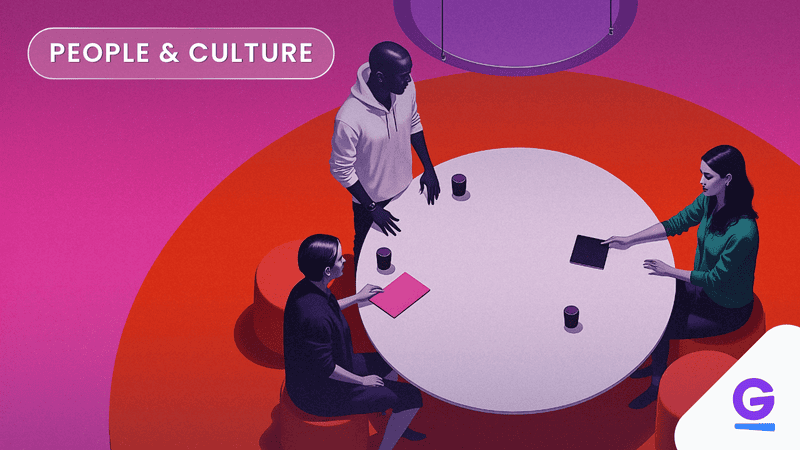
We have all sat through the virtual happy hour that was nobody's idea of fun. The awkward silence after the icebreaker question. The four people who turned their cameras off five minutes in. The chat that was more polite emoji reactions than actual conversation.
Year end events for teams do not have to be like this. The difference between a team event people dread and one they genuinely look forward to is not budget. It is format. Active, game-based formats that give people something to do together produce measurably better engagement and more memorable shared moments than passive social formats that ask people to simply be present and enjoy themselves.
Key highlights
- Research from Gallup identifies shared positive experiences as one of the strongest drivers of team connection and psychological safety. Year-end events are one of the highest-leverage opportunities in the HR calendar to create these moments deliberately.
- Active participation formats produce significantly stronger social connection outcomes than passive ones. A team that plays together leaves with shared memories, ongoing competitive narratives, and peer relationships that did not previously exist.
- The most effective virtual team building events combine a high-energy synchronous moment (live trivia, tournament, prize draw) with a lower-key async ritual (prediction challenge, team leaderboard) that sustains engagement across the event window.
- Hybrid teams present a specific design challenge: the event must be equally accessible and equally engaging for in-office and remote participants simultaneously. Game-based formats with digital access for all participants are the most reliably inclusive option.
- Recognition built into game formats, announced results, visible leaderboards, prize draws with named winners, creates the acknowledgment moments that end-of-year events are supposed to deliver without the performative awkwardness of scripted award ceremonies.
Why most year-end events miss the mark
The standard virtual events for teams formula runs something like this: a video call, some slides reviewing the year, a few awards presented by leadership, and a social breakout with no particular agenda. Everyone attends because attendance is implicitly expected. Nobody is particularly changed by the experience.
The problem is not that people do not want to connect. It is that passive formats put the entire social labor on the participants. When the event does not give people something to do, the people who are naturally social carry it and everyone else watches.
Active game-based formats solve this structurally. When there is a game to play, a leaderboard to check, a prediction to submit, or a prize to win, participation does not require social confidence or the energy to perform enthusiasm. It requires showing up and playing. The connection is a byproduct of the shared activity rather than the explicit goal that nobody knows how to pursue.
High-energy year end event formats
These formats work best as the centrepiece of the event: a defined start time, everyone participating simultaneously, and a clear result that everyone experiences together.
Live Trivia Championship A live trivia session with themed rounds that reflect the year, the team, and the organization creates the competitive energy and collective experience that passive events cannot. Mixed-knowledge rounds (company history, pop culture, industry news) give different people a chance to shine. A final round with higher stakes creates the climax that makes the event memorable. Run through GUUL's EMS, the host manages questions and results while participants join from anywhere.
Year-End Tournament A knockout bracket tournament in a casual game format (Chess, Scrabble, Battleship, Connect4) creates a multi-day narrative arc that sustains engagement beyond a single event session. Participants check the bracket, anticipate their next match, and discuss results in channels between rounds. The final match becomes a genuine shared moment. Cross-departmental brackets that mix participants beyond their usual teams produce the relationship-building outcomes that year-end events are supposed to deliver.
Tombola and Prize Draw A live tombola draw with company-sponsored prizes creates the collective anticipation and surprise that variable reward mechanics reliably produce. Participants know their name is in the draw. The moment of the announcement is genuinely exciting. Run through GUUL's EMS, the draw is managed automatically with results displayed in real time. Gift cards, extra leave days, experience vouchers, team lunches: the prize determines the energy, but the format works regardless of budget level.
Wheel of Fortune Draw Similar to tombola but with visible spinning mechanics that amplify the anticipation. GUUL's Wheel format displays names or prizes on screen as the wheel spins, creating the shared-screen moment that makes draw events genuinely exciting rather than a list being read out.
Lower-key virtual team building events
Not every team wants a high-energy showstopper. These formats work well as warm-up activities, async rituals across the event period, or alternatives for teams that prefer quieter connection.
Year-End Prediction Challenge In the weeks before the event, participants submit predictions: company milestones for next year, industry trends, team outcomes, cultural moments. At the year-end event, predictions are reviewed, scores are tallied, and the most accurate predictor is recognized. This format creates engagement across the full run-up to the event, gives people something to discuss in advance, and produces a built-in results moment that drives attendance.
Team Leaderboard Challenge A daily puzzle or game challenge running across the two weeks before the year-end event creates an ongoing competitive narrative that the event closes out. Teams or individuals compete on a shared leaderboard. The event includes a results ceremony that acknowledges top performers. The leaderboard data from GUUL's EMS provides the recognition material without requiring anyone to compile it manually.
Paired Match Challenge A structured program of paired games (one-on-one Chess, Scrabble, or Battleship matches) between participants who have not previously interacted much creates the peer relationships that year-end events are supposed to build but rarely do. Assign matches cross-departmentally. Give participants two weeks to complete them. The results feed into the year-end event as a competitive narrative.
What format fits which team
| Format | Energy level | Sync or async | Best for | Participant range |
|---|---|---|---|---|
| Live Trivia Championship | High | Synchronous | All-hands, department events | 10-500+ |
| Year-End Tournament | Medium | Async + sync final | Teams with competitive culture | 8-64 |
| Tombola / Prize Draw | High | Synchronous | Recognition moments, celebrations | Any size |
| Wheel of Fortune Draw | High | Synchronous | Reward campaigns, milestones | Any size |
| Prediction Challenge | Low-Medium | Async (results sync) | Engagement across event run-up | Any size |
| Team Leaderboard Challenge | Low | Async | Sustained engagement, quieter teams | 8-50 |
| Paired Match Challenge | Low-Medium | Async | Cross-departmental connection | 8-40 |
Planning checklist for year end events
Six weeks before: Confirm format, budget, and participation expectations. Book any external prizes or physical elements. Set up the event in GUUL's EMS if using game-based formats.
Four weeks before: Launch internal communications. Frame the event as something to look forward to rather than another obligation. For prediction challenges or leaderboard formats, open participation now.
Two weeks before: Send reminder communications with clear instructions. For tournament brackets, confirm participant list and seed the draw.
Event week: Run the synchronous event with a clear host, a defined timeline, and a results moment that gives everyone something to experience together. Keep it to 45-60 minutes for maximum attention.
Post-event (within 48 hours): Share results, photos, and highlights. Acknowledge top performers by name. If using GUUL's EMS, the event analytics provide participation data and engagement metrics automatically.
Hybrid-specific note: Ensure all game formats have digital access for remote participants and screen-sharing for in-office participants. The event must be equally engaging from both contexts. GUUL's browser-based formats work on any device without installation, which removes the access barrier that makes many hybrid events feel unequal.
How GUUL's EMS supports year end events
GUUL's Event Management System is built for exactly this use case: structured, game-based team events with defined outcomes, managed without operational overhead.
Live event formats including Trivia, Tombola, Wheel, Raffle, and Prediction games are configured through the EMS and run from a single dashboard. The host manages the event while participants join from any device using existing Microsoft, Google, or email credentials. No separate accounts, no downloads, no setup friction on the participant side.
Tournament formats are managed end-to-end: bracket generation, match scheduling, results tracking, and a final leaderboard that the event closes out. The EMS handles the administrative complexity so the HR team can focus on the experience rather than the logistics.
For organizations running year end events across multiple teams, departments, or locations, the EMS provides centralized event management with separate event spaces for each group, accessible from a single organizational account.
Key takeaways
- Year end events produce the outcomes they are designed for (connection, recognition, shared memory) when they give participants something to actively do together rather than asking them to socialize without structure.
- High-energy synchronous formats (trivia, tombola, tournament finals) create the collective moment. Lower-key async formats (prediction challenges, leaderboard competitions) sustain engagement across the run-up period. The best programs combine both.
- Cross-departmental participation design, whether through mixed tournament brackets or paired match programs, is what turns a year-end event into a relationship-building opportunity rather than a reward for existing relationships.
- Hybrid accessibility requires deliberate design. Browser-based game formats with no installation requirement are the most reliably inclusive option for events spanning in-office and remote participants.
- Recognition built into game formats, named results, visible leaderboards, live prize draws, delivers the acknowledgment that year-end events are supposed to provide without the scripted awkwardness of formal award ceremonies.
FAQ
What are the best year end events for remote teams? The most effective year end events for remote teams combine a synchronous high-energy moment with async engagement across the run-up period. Live trivia championships, tombola prize draws, and tournament final matches work well as the synchronous event centrepiece. Prediction challenges and leaderboard competitions running across the two weeks before the event sustain engagement and give the synchronous event a results moment to close out. All of these work equally well for remote and hybrid teams when deployed through browser-based platforms that require no installation.
How do you make virtual team building events feel less forced? The most reliable approach is replacing passive social formats with active game-based ones. When there is a game to play, a leaderboard to check, or a prize to win, participation does not require social confidence or performed enthusiasm. The connection happens through the activity rather than being the explicit goal. Cross-departmental brackets that mix participants beyond their usual teams produce new relationships rather than reinforcing existing ones.
How long should a virtual year-end event be? 45 to 60 minutes is the optimal window for a synchronous year-end event. Long enough to create a genuine shared experience, short enough to sustain full attention throughout. For events with pre-event engagement components like prediction challenges or leaderboard competitions, the total engagement window can extend across several weeks while the synchronous event remains tightly timed.
How do you run a tombola or prize draw for a remote team? A tombola for a remote team requires a platform that manages participant registration, conducts the draw automatically, and displays results in real time to all participants. GUUL's EMS handles all three: participants are registered in advance, the draw runs live during the event with results displayed on screen, and named winners are announced automatically. Prizes can be digital (gift cards, experience vouchers) or physical (shipped in advance).
What is the best format for a year-end team event with a mixed in-office and remote audience? Browser-based game formats with no installation requirement are the most reliably inclusive option for hybrid year-end events. All participants access the event through the same link from any device. In-office participants can gather around a shared screen for the synchronous moment while remote participants join individually. GUUL's formats work on any device through existing Microsoft, Google, or email credentials, removing the access friction that makes many hybrid events feel unequal for remote participants.
Run your year-end event with GUUL's Event Management System →
Sources
- Gallup (2024). State of the Global Workplace: shared positive experiences and psychological safety. https://www.gallup.com/workplace/349484/state-of-the-global-workplace.aspx
- Albulescu, P. et al. (2022). Meta-analysis of micro-breaks. PLOS ONE. https://journals.plos.org/plosone/article?id=10.1371/journal.pone.0272460
- Carrasco-Farré, C. and Hakobjanyan, N. (2024). Team behavioral interdependence in multiplayer games. Scientific Reports. https://doi.org/10.1038/s41598-024-57919-w